
June 23, 2025
•By Anix AI Team
•AI Agents
Understanding AI Agents: Transforming African Business Operations
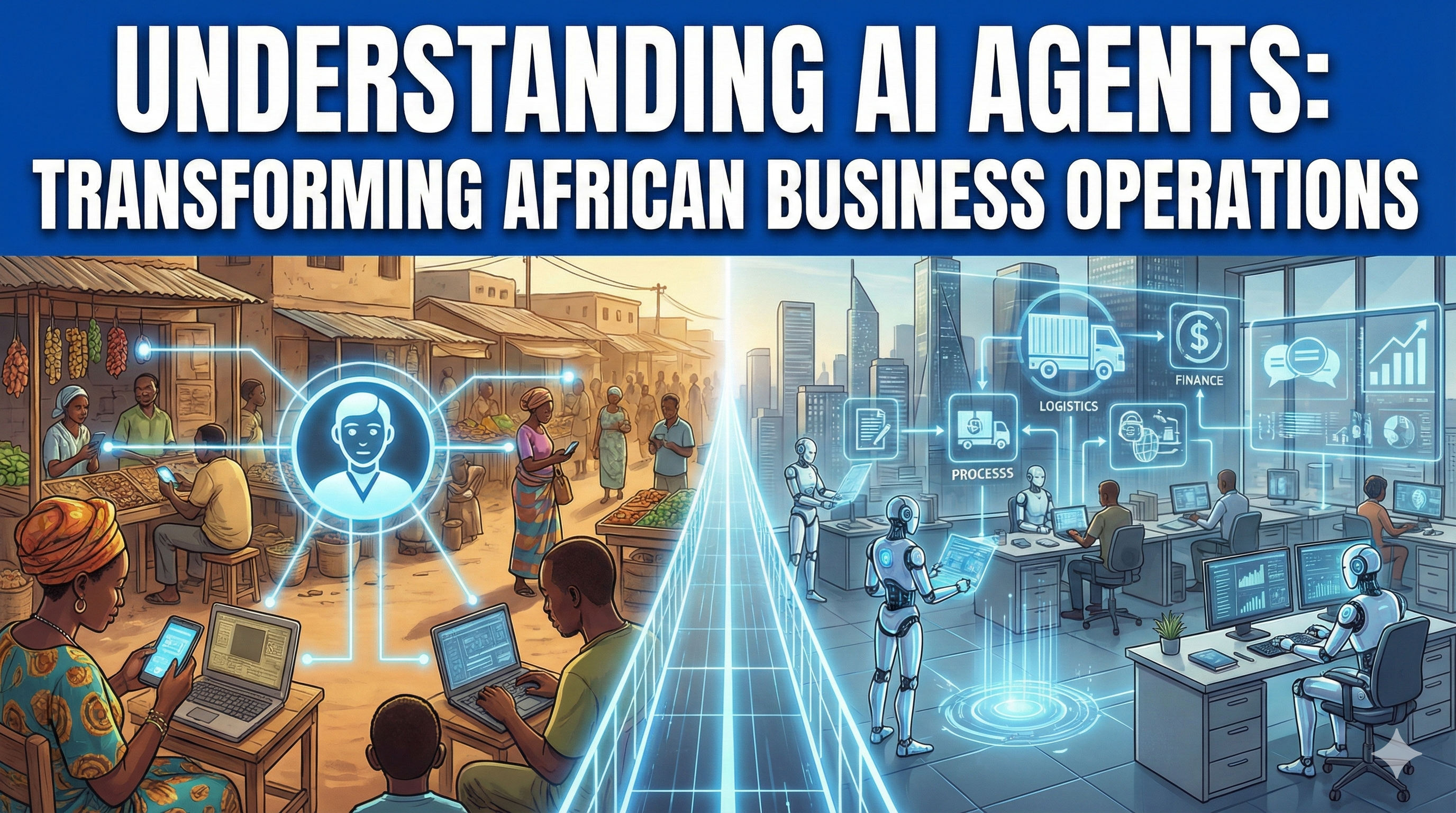
African businesses are discovering the transformative power of AI agents—intelligent digital assistants that perform complex tasks, make decisions, and interact with customers autonomously. As Africa's digital economy grows rapidly, AI agents are becoming essential tools for overcoming traditional challenges like limited human resources and infrastructure constraints while providing 24/7 customer service across diverse markets and languages.
AI Agents: A Game-Changer for African Businesses
AI agents are sophisticated software programs that can perceive their environment, make decisions, and take actions without constant human supervision. For African businesses, this technology addresses critical challenges including limited skilled workforce, infrastructure constraints, and the need to serve customers across multiple time zones and languages. Unlike simple chatbots, AI agents understand context, learn from interactions, and adapt to the unique business environments found across Africa's diverse markets.
Modern AI agents can handle multiple tasks simultaneously while maintaining context across extended interactions. This capability is particularly valuable for African businesses that often operate with lean teams and need to maximize efficiency to compete in both local and global markets.
Types of AI Agents Transforming African Enterprises
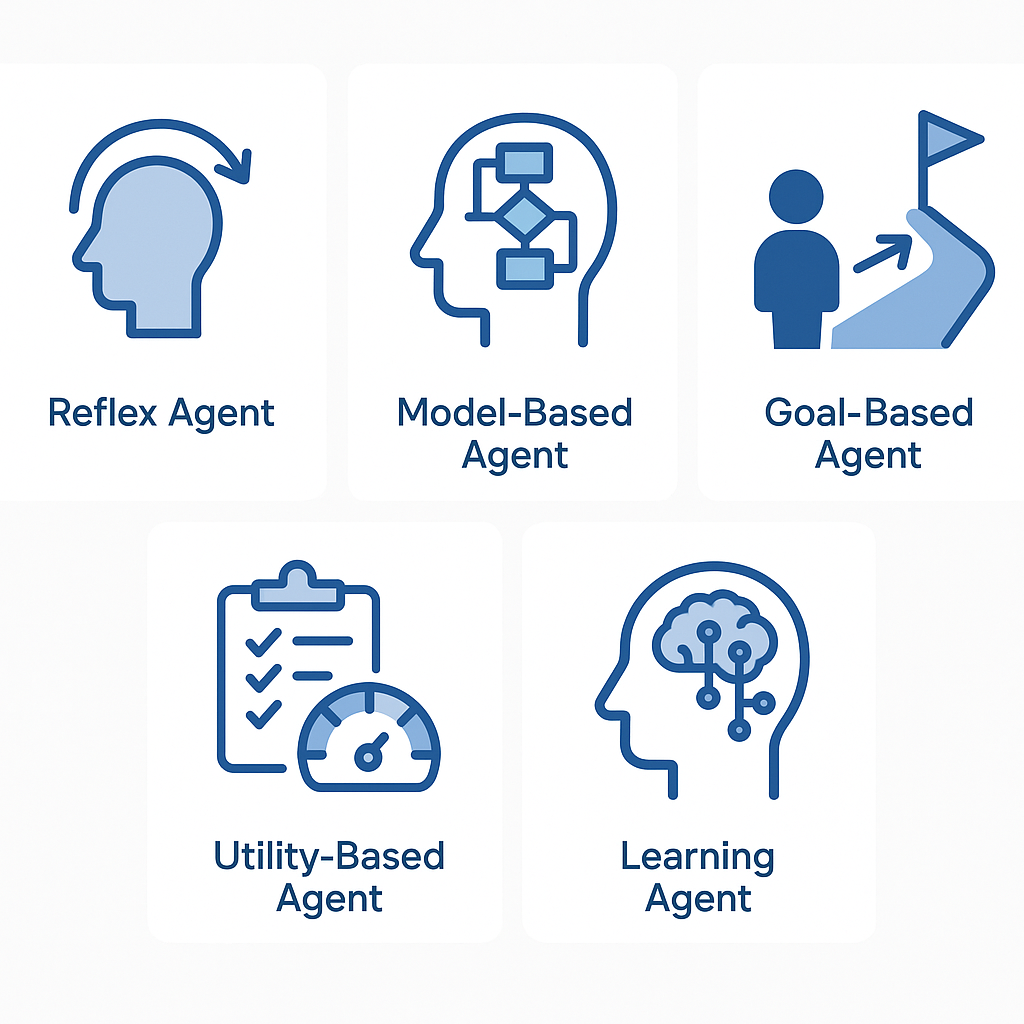
Conversational AI agents are revolutionizing customer service across Africa, handling inquiries in multiple local languages from Swahili to Yoruba, French to Arabic. These agents provide 24/7 support for businesses serving customers across different time zones, from Morocco to South Africa.
Task-oriented AI agents are helping African businesses automate complex processes like inventory management for retailers in Lagos, appointment scheduling for clinics in Nairobi, and financial reporting for banks in Johannesburg. These agents excel at integrating with existing systems while delivering consistent results.
Decision-making agents are being deployed by African enterprises to optimize supply chains, manage agricultural resources, and coordinate logistics across the continent's challenging infrastructure landscape.
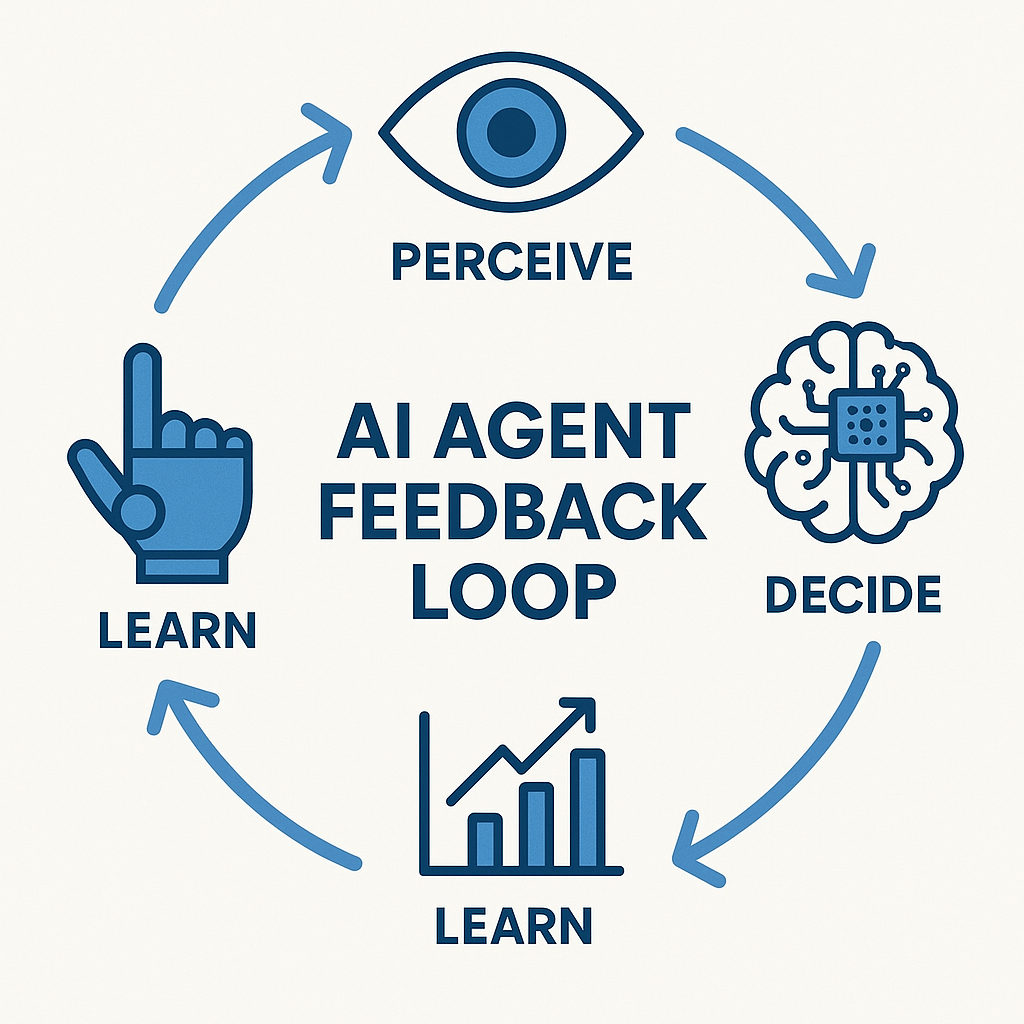
AI Agent Feedback Loop
Transforming Customer Experience Across Africa
African customers increasingly expect instant, personalized service despite businesses often having limited resources. AI agents meet these expectations by providing consistent, high-quality customer service that operates across time zones and language barriers. This is particularly valuable for African businesses serving diverse markets with different cultural expectations and communication preferences.
These intelligent agents can access customer history, understand cultural context, and provide relevant assistance in local languages. For African businesses expanding across borders, AI agents ensure consistent service quality whether serving customers in Cairo, Lagos, or Cape Town.
Streamlining Operations in Resource-Constrained Environments
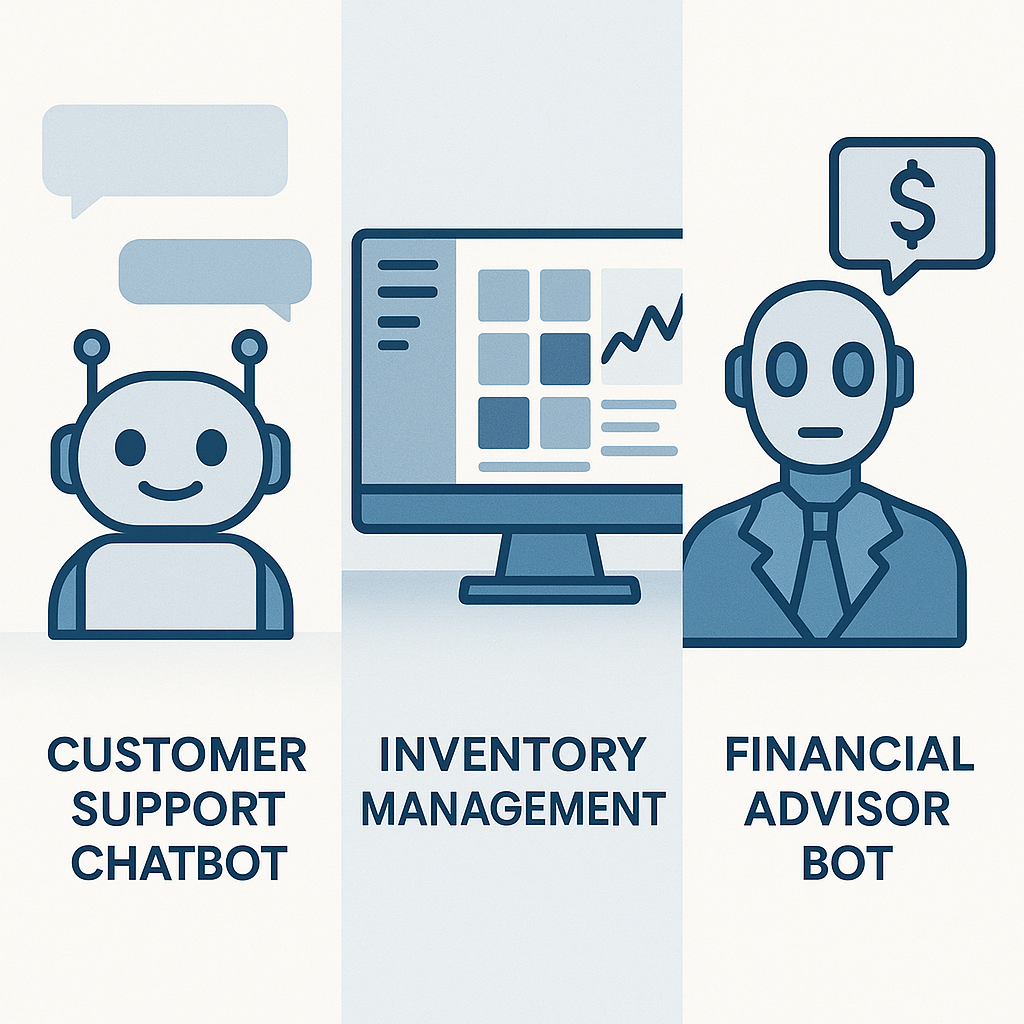
AI agents are revolutionizing internal operations for African businesses by automating workflows that traditionally required significant human resources. From processing invoices for small businesses in Ghana to coordinating supply chains for manufacturers in Kenya, these agents enable African enterprises to operate efficiently with lean teams.
Employee productivity increases dramatically when AI agents handle routine tasks like scheduling, data entry, and report generation. This allows African businesses to focus human talent on strategic activities like business development, customer relationships, and innovation.
Key Benefits for African Enterprises
Cost reduction is particularly impactful for African businesses operating in price-sensitive markets. AI agents can handle workloads equivalent to multiple employees while operating continuously without breaks or overtime costs. This is especially valuable for African SMEs that need to maximize efficiency to compete with larger enterprises.
Consistency and reliability improve dramatically when AI agents handle customer interactions and business processes. This is crucial for African businesses building trust in markets where personal relationships and reliability are highly valued.
Scalability becomes achievable for African businesses looking to expand across borders or serve growing markets. AI agents can handle increasing workloads without proportional increases in costs, enabling rapid growth across the continent.
Real-World Applications Across African Industries
African banks and fintech companies are using AI agents to provide financial services to underbanked populations, handling everything from account inquiries to loan applications in local languages. Mobile money providers like M-Pesa are exploring AI agents to enhance customer support across multiple countries.
Agricultural businesses across Africa are deploying AI agents to provide farmers with weather updates, crop advice, and market prices via SMS and voice calls in local languages. This is particularly valuable in rural areas where internet connectivity may be limited.
Healthcare organizations are using AI agents to provide basic health information, appointment scheduling, and medication reminders, helping address the continent's healthcare access challenges.
Implementation Strategies for African Businesses
Successful AI agent implementation in Africa begins with understanding local market needs and constraints. Start with use cases that address specific African challenges like language diversity, infrastructure limitations, or resource constraints.
Choose platforms that work well with existing African infrastructure, including mobile-first approaches and solutions that function with limited internet connectivity. Consider integration with popular African platforms like mobile money systems and local communication channels.
Overcoming African-Specific Challenges
Language diversity across Africa requires AI agents that can handle multiple local languages and dialects. Successful implementations often start with major languages like English, French, Arabic, and Swahili, then expand to include local languages based on market needs.
Infrastructure constraints require AI agents designed for mobile-first environments with offline capabilities. Solutions must work effectively with varying internet speeds and connectivity issues common across the continent.
The Future of AI Agents in Africa
Advanced AI agents are being developed specifically for African contexts, with enhanced understanding of local languages, cultural nuances, and business practices. These agents will better serve the continent's unique needs and opportunities.
Multi-modal AI agents that can process text, voice, and images will be particularly valuable in Africa, where voice communication is often preferred and visual information is important for serving diverse literacy levels.
Conclusion: Embracing AI Agents for African Growth
AI agents represent a transformative opportunity for African businesses to overcome traditional constraints and compete globally. By addressing challenges like limited human resources, infrastructure constraints, and the need for multilingual support, AI agents enable African enterprises to scale efficiently and serve customers effectively.
The question for African businesses isn't whether to adopt AI agents, but how quickly they can implement them effectively. Start with pilot projects that address specific local challenges, then expand as you gain experience and confidence.
The future belongs to African businesses that successfully integrate AI agents while maintaining the personal touch and cultural sensitivity that African markets value. Those who embrace this technology now will be best positioned to lead Africa's digital transformation.